


Green transformation accelerates! Steel companies collaborate with aluminum companies to build a circular economy industry chain under the background of "dual carbon"
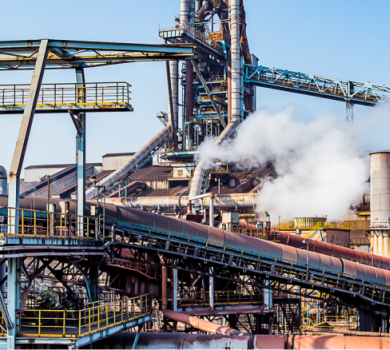
Driven by the dual goals of "dual carbon" and the tightening of global green trade rules, the two high energy consuming industries of steel and aluminum have broken down industry barriers and opened up new models of cross-border collaboration. By complementing resources, sharing technology, and deeply integrating the industrial chain, enterprises work together to build a closed-loop system of "resources products renewable resources", converting production waste into high-value raw materials, promoting the transformation of traditional heavy industry from "linear consumption" to "circular symbiosis", and providing replicable practical samples for the green development of manufacturing industry.
Cross border collaboration: opening up channels for solid waste resource utilization
The core of cooperation between steel and aluminum companies lies in solving the problem of waste disposal in their respective production processes and achieving efficient resource circulation. The hazardous wastes such as aluminum ash and carbon slag generated during the aluminum production process are treated harmlessly and become high-quality auxiliary materials for steel smelting. Jiugang Dongxing Aluminum Industry uses an integrated process of "crushing screening melting" to separate aluminum ash into metal particles, and the remaining secondary ash is directly supplied to the steel industry for resource utilization through ball pressing treatment, achieving a "clean and efficient" process.
At the same time, by-products such as blast furnace gas and waste residue from steel companies also feed back into aluminum production. After purification, blast furnace gas can be used as a clean energy source for aluminum processing, while steel waste residue is used to prepare refractory materials required for aluminum electrolysis, forming a two-way cycle of "aluminum enterprise hazardous waste steel auxiliary materials" and "steel by-products aluminum raw materials". This cross-border collaboration has reduced the average cost of solid waste disposal by more than 40% for both parties, and some enterprises have achieved a transition from "paying" to "generating revenue" in hazardous waste disposal.
Technological Innovation: Strengthening the Hard Support of Circular Economy
Technological breakthroughs are the key guarantee for the implementation of cross industry circular systems. In the field of solid waste treatment, aluminum companies have broken through the thermal regeneration technology of carbon slag, converting hazardous waste carbon slag from electrolytic aluminum into regenerated electrolyte for reuse in recycling tanks. Jiuquan Iron and Steel Dongxing Aluminum Industry has digested nearly 5400 tons of carbon slag in recycling tanks throughout the year, reducing disposal costs by about 3.1 million yuan, and generating 9.42 million yuan in revenue through competitive sales of carbon slag. Steel companies are upgrading their waste residue purification processes to improve the purity of recycled raw materials to meet the high standards required for aluminum processing.
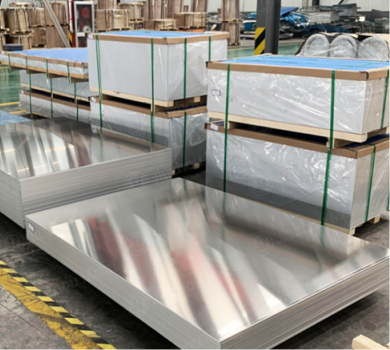
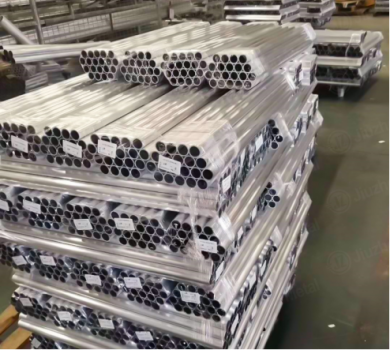
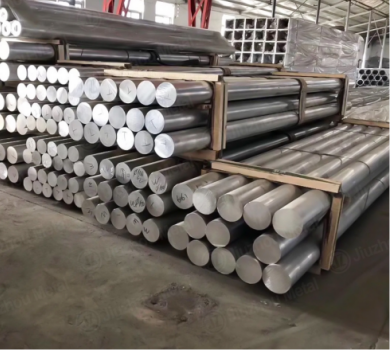
The continuous iteration of renewable resource utilization technology promotes the maximization of resource value. Aluminum companies establish a closed-loop recycling system for waste aluminum, which involves sorting and melting aluminum processing waste into high-purity aluminum liquid through electrolytic aluminum production lines, which is then supplied to downstream production. This significantly reduces the burning rate of waste aluminum in the furnace; Steel and aluminum companies are jointly researching and developing the technology for grade protection and utilization of recycled aluminum, which converts low value waste such as waste guide rods and aluminum slag into high-quality aluminum ingots or steel smelting raw materials. Jiuquan Iron and Steel Dongxing Aluminum Industry processes about 5600 tons of waste aluminum annually and produces 4500 tons of aluminum ingots, significantly saving external procurement costs. In addition, the application of intelligent monitoring systems has achieved precise control of resource consumption throughout the entire process.
Green Win Win: Dual Enhancement of Economic Benefits and Ecological Value
The construction of a circular economy industry chain brings significant economic and environmental benefits to enterprises. On the cost side, cross-border resource sharing has resulted in an average reduction of 15% -20% in raw material procurement costs for both parties, and an increase of over 18% in energy utilization efficiency. Jiuquan Iron and Steel Dongxing Aluminum Industry has achieved a direct economic benefit of 280 million yuan through a circular economy model. On the profit side, high value-added recycled products have become a new profit growth point, with premiums for products such as recycled aluminum and recycled electrolytes reaching 20% -30%.
The environmental benefits are equally outstanding. The utilization rate of solid waste resources has significantly increased, and the recycling rate of aluminum products has reached 80%. The joint disposal of hazardous waste by steel and aluminum enterprises has achieved 100% resource utilization; The energy structure continues to be optimized, and enterprises are increasing the proportion of clean energy and reducing carbon emissions per unit product through the development of photovoltaic power stations and optimization of air supply systems. This green transformation not only helps companies cope with international rules such as the European Union Carbon Tariff (CBAM), but also enhances their competitiveness in the global green supply chain.
Industry Trend: From Single Point Cooperation to Ecological Co construction
The cross-border circulation of steel and aluminum enterprises has extended from the initial solid waste exchange to the full industry chain synergy. Leading enterprises take the lead in building a cross industry material sharing platform to achieve "point-to-point" allocation of general spare parts, digest accumulated materials while reducing inventory capital occupation. Some enterprises are further exploring the integrated model of "coal electricity steel aluminum renewable resources" to form a regional circular economy ecology.
At the policy level, documents such as the "Opinions of the General Office of the State Council on Accelerating the Construction of a Waste Recycling System" provide clear guidance for cross industry collaboration, and various regions have also introduced subsidy policies to support the research and application of recycling technologies. Looking ahead to the future, with the continuous breakthroughs in technology and the improvement of standard systems, the circular cooperation between steel and aluminum industries will expand to deeper and wider levels, driving upstream and downstream industries to jointly achieve low-carbon transformation and injecting lasting momentum into the realization of the "dual carbon" goals in the industrial sector.
“Do you see over yonder, friend Sancho, thirty or forty hulking giants? I intend to do battle with them and slay them.”
— Don Quixote


leave a comment